

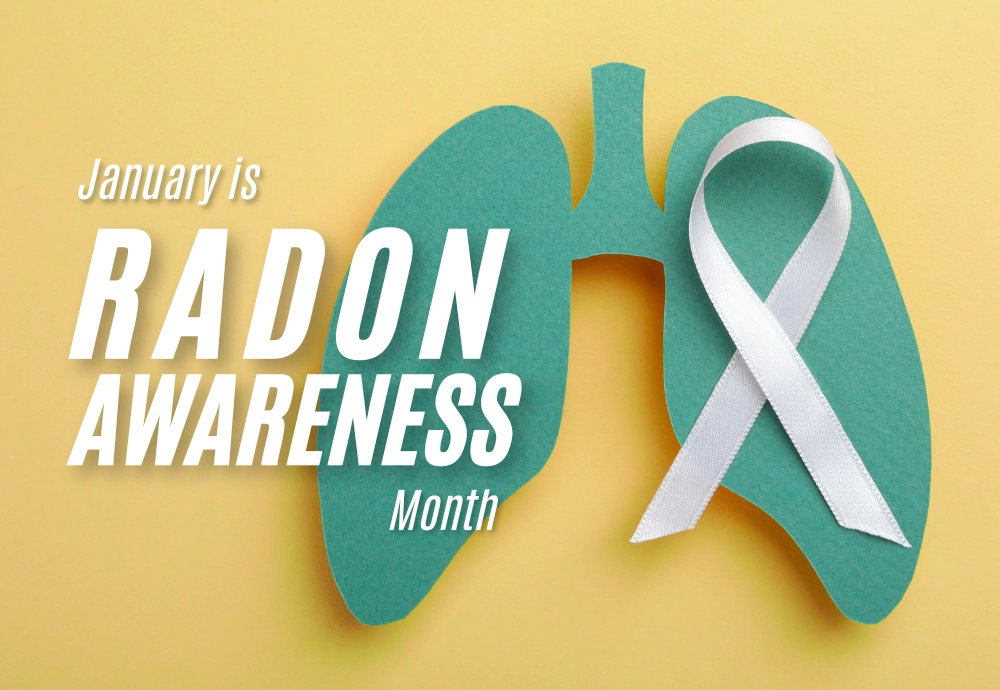
January is National Radon Awareness Month, a key time to highlight a hidden but serious health risk. Radon is a colorless, odorless, radioactive gas produced when naturally occurring uranium in soil and rock breaks down. Because it cannot be seen or smelled, most people are unaware of its presence unless their home or building is tested.
Radon is a Major Risk Factor for Lung Cancer
The health risks associated with radon exposure are significant—but fortunately, they are also largely preventable. Radon is the second-leading cause of lung cancer in the United States, after cigarette smoking, and the leading cause of lung cancer among non-smokers. It is estimated to cause about 21,000 lung cancer deaths each year in the U.S. alone, according to the U.S. Environmental Protection Agency (EPA).
Radon enters buildings through cracks in foundations, gaps around pipes, crawl spaces, and other openings in contact with the ground. Once inside, it can accumulate to harmful levels. Over time, breathing radon-contaminated air exposes lung tissue to radioactive particles, which can damage DNA and increase cancer risk.
Who Is Most at Risk?
While smokers exposed to radon have a much higher risk of developing lung cancer than non-smokers exposed to the same levels, radon still poses a serious health risk to people who have never smoked. The EPA estimates 10–20% of radon-related lung cancers occur in lifelong non-smokers, highlighting the importance of awareness and prevention for everyone.
There is no known safe level of radon exposure, meaning even lower levels carry some degree of risk. Federal health agencies recommend reducing radon whenever possible.
Testing For and Reducing Radon Is Simple and Effective
Testing your home for radon is easy and inexpensive. Test kits are available online, at hardware stores and through local health departments. Tests should be placed on the lowest occupied level of your home and repeated every couple of years or after major renovations.
The EPA recommends fixing your home if radon levels are 4.0 picocuries per liter (pCi/L) or higher. It also suggests considering mitigation for levels between 2.0 and 4.0 pCi/L since all exposure carries risk.
If your radon test shows elevated levels, professional radon mitigation systems can be installed to significantly reduce indoor radon, often lowering levels by up to about 99%. After the system is installed, follow-up testing helps confirm that levels have dropped.
Protect Your Home and Health
At Green Bay Oncology, prevention and awareness are essential parts of how we care for our patients and community. Radon exposure is largely preventable and testing your home is a simple step you can take today to protect your lung health.
If you have questions about lung cancer risk factors, radon testing or how environmental exposures affect health, talk with your care team. Early awareness and action can make a meaningful difference.