The Leukemia Patient Experience

Dr. Fred Appelbaum joins Green Bay Oncology physicians Dr. Brian Burnette, Dr. Kamal Abbi, Dr. Evan Wenig, and UW–Green Bay professor Dr. Brian Merkel to explore how leukemia treatment has evolved—highlighting rising survival rates, the emotional realities of care, and the innovations reshaping hope for patients and families.
Supporting Patients with Food Insecurity
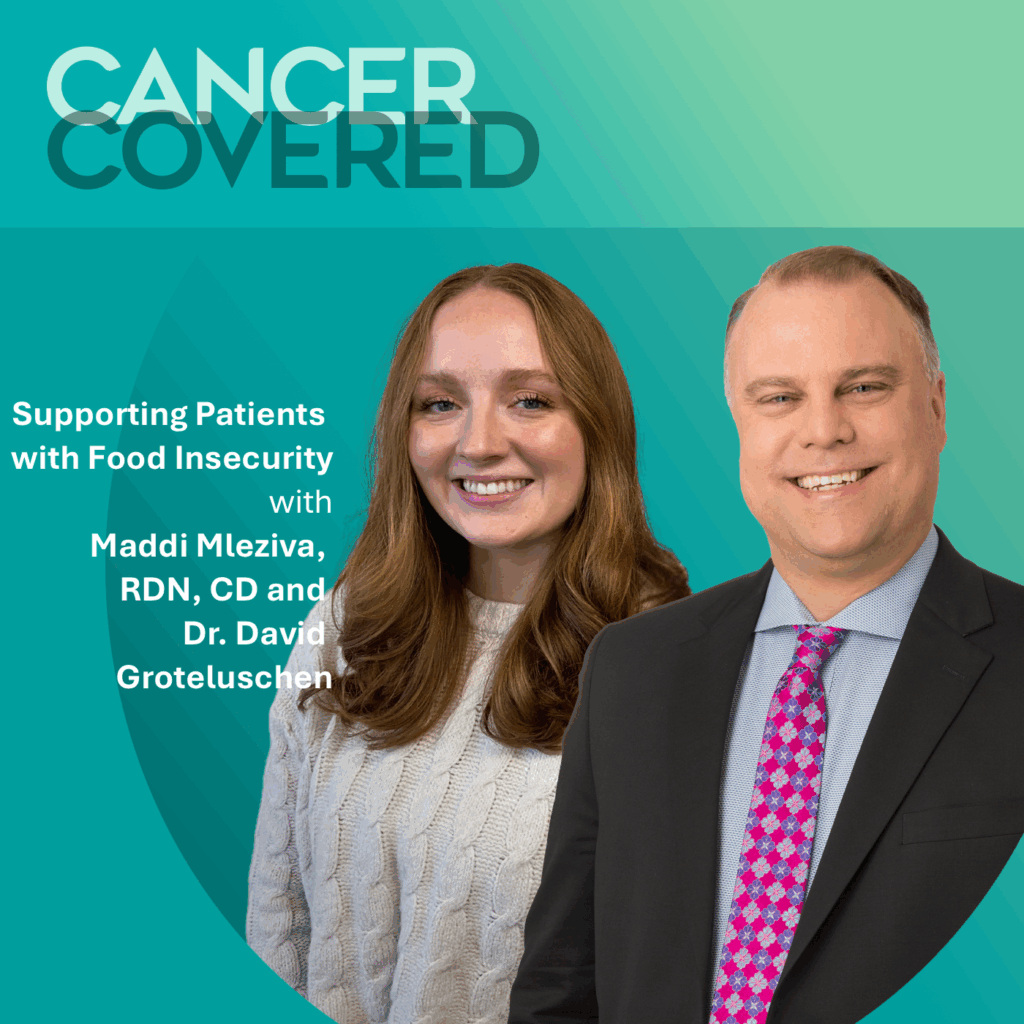
Oncologist Dr. David Groteluschen and Clinical Dietician Maddi Mleziva discuss the alarming rate of food insecurity among cancer patients, which significantly increases calorie needs and the risk of complications like cachexia during treatment, and the collaborative strategies used by the care team to ensure access to vital nutrition and maximize caloric intake over nutritional perfection.
Social Work Services in Cancer Care

In this vital episode of Cancer Covered, social worker Tom Bekkers joins oncologists Dr. David Groteluschen and Dr. Michael Guiou to discuss the indispensable role of social work in providing comprehensive support for patients and families navigating the emotional, practical, and financial challenges of cancer care.
Dr. Brian Merkel’s Story: From Surviving Cancer to Inspiring Future Doctors (Part 2)

In the second half of our discussion, Dr. Brian Merkel moves beyond his 1984 battle with acute myeloid leukemia (AML) to focus on his life as a survivor. Following a successful bone marrow transplant, Dr. Merkel is now dedicated to inspiring and mentoring the next generation of doctors and scientists.
“A 15 out of 10”: Judy’s breast cancer journey with Dr. Judy Tjoe

A breast cancer diagnosis was the last thing Judy expected. Dr. Judy Tjoe’s expertise and extraordinary personal care made all the difference.
Dr. Brian Merkel’s Story: From Surviving Cancer to Inspiring Future Doctors

Dr. Brian Merkel, Associate Professor and Chair of Human Biology at the University of Wisconsin Green Bay, joins Green Bay Oncology’s Dr. Brian Burnette and his former student Dr. Evan Wenig to share his remarkable journey of surviving acute myeloid leukemia through one of the earliest bone marrow transplants and how that experience continues to shape his life’s work teaching and mentoring future doctors and scientists.
Green Bay Oncology providers bring clinical research excellence close to home
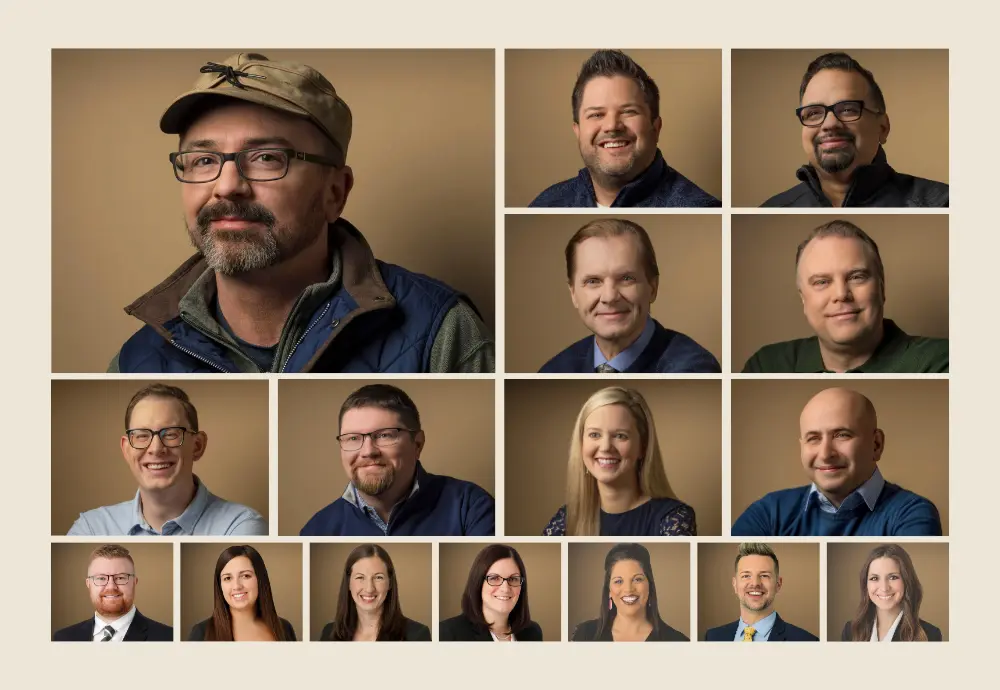
16 Green Bay Oncology providers earn national recognition for enrolling patients in clinical trials, bringing cancer research excellence close to home.
BiTE Therapy

Dr. Kamal Abbi and Dr. Brian Burnette discuss BiTE therapy, a cutting-edge immunotherapy that brings the body’s own T-cells into direct contact with cancer cells to destroy them. They highlight its rapid advancements and the potential to transform certain incurable cancers into curable diseases with time-limited treatment.
Pluvicto offers a new treatment option for advanced prostate cancer

Learn how Pluvicto treats advanced prostate cancer with targeted radiation, who it’s for, how it works and where to access it in Northeast Wisconsin.
Pluvicto for Advanced Prostate Cancer

Dr. Michael Guiou, Dr. Kamal Abbi, and Dr. Matthew Ryan discuss Pluvicto, an innovative radiopharmaceutical treatment for advanced prostate cancer that delivers targeted radiation throughout the body with fewer side effects than traditional chemotherapy.