
Podcast: Play in new window | Download
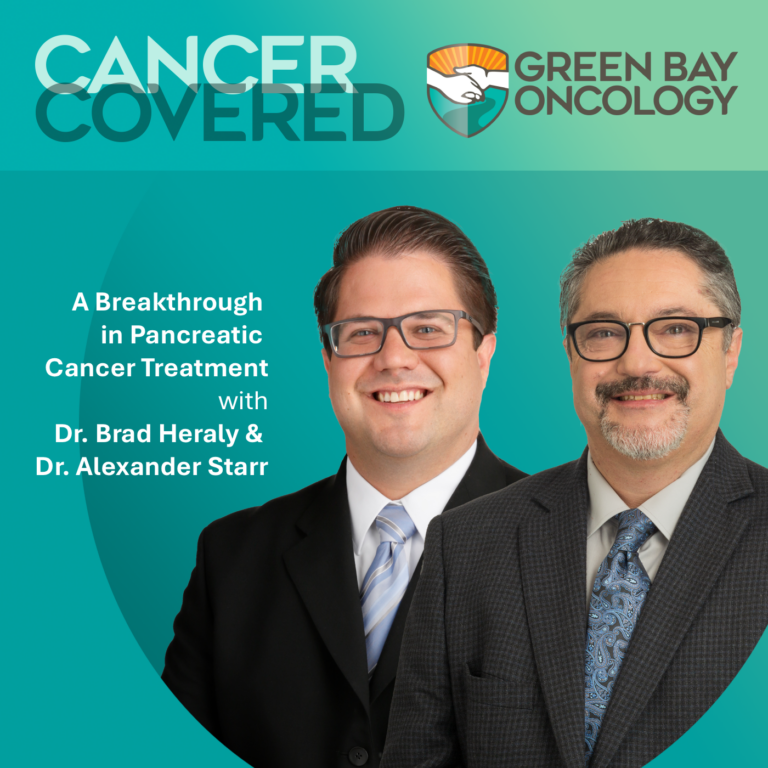
Dr. Brad Heraly and Dr. Alexander Starr sit down to break down a landmark advancement in one of oncology’s most challenging frontiers: the FDA approval of daraxonrasib for metastatic pancreatic cancer. They explore why targeting the elusive RAS pathway remained out of reach for over 40 years, how this targeted therapy nearly doubled median overall survival in second-line clinical trials compared to standard chemotherapy, and what this shift means for patients, families and the future landscape of solid tumor care.
“It took science 40 years to figure out how to target this difficult enzyme, and it’s really been quite amazing on how fast the clinical research and things have moved over the last 5 to 10 years in this. I see this kind of exploding going forward.” — Dr. Brad Heraly
In this episode, we cover:
- Breaking a 15-year plateau: Why the approval of daraxonrasib marks the first major therapeutic leap for metastatic pancreatic cancer in over a decade, and how second-line survival rates of 13.2 months are shifting clinical expectations.
- Targeted therapy vs. traditional chemotherapy: How disrupting the molecular RAS signaling complex differs from cytotoxic regimens like FOLFIRINOX and gemcitabine/nab-paclitaxel, sparing patients classic side effects like hair loss while introducing manageable targeted toxicities.
- The biological hurdles of pancreatic cancer: An explanation of the “rule of tens,” why the disease often goes unnoticed until locally advanced or metastatic, and how retroperitoneal anatomy complicates early surgical resection.
- Expanding into front-line and multi-cancer trials: What the ongoing Resolute 303 and Resolute 304 trials mean for bringing pan-RAS inhibition into first-line, neoadjuvant, and adjuvant settings, as well as its emerging potential across RAS-mutated lung and colorectal malignancies.
- Navigating access and real-world care: Insights into navigating FDA-aligned second-line indications, overcoming insurance authorization and oral specialty pharmacy barriers, and how collaborative clinical teams support patients through day-to-day management.